
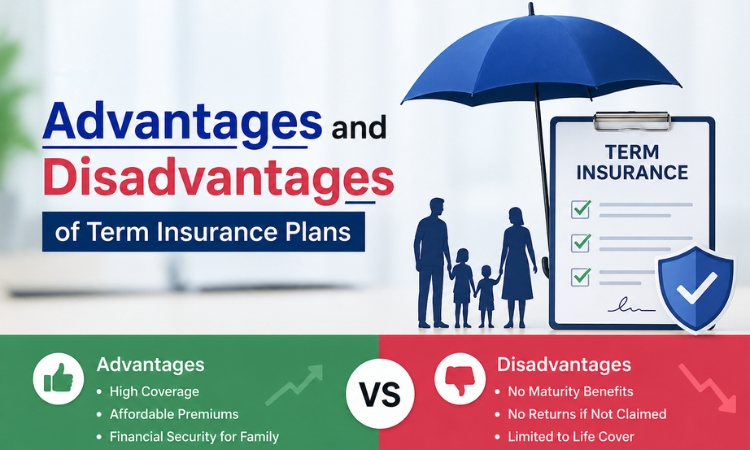
Financial security is one of the most important aspects of any family. We live in a completely uncertain world, and a financial backup ensures that you can maintain a lifestyle with dignity and promise. Financial security backup becomes more important when the earner of a family passes away.
Many Indian families still have only one earning member, and that’s where term insurance offers a stronghold for the family in the event of an unfortunate event. Notably, term insurance is useful for all earners, young parents, and individuals.
But there are risks of term insurance as well. In this blog, we will discuss the term insurance advantages and disadvantages that will help you choose the right option for you.
So, let’s discuss.
What is Term Insurance?
Term insurance is a type of life insurance that provides coverage for a specific period. The nominee receives the sum assured if the policyholder dies within the coverage period.
Term Insurance provides maximum protection through its low premium rates, which makes it the top selection for people who need protection and have family obligations.
Also Read: What Is Miscellaneous Insurance
Why Choose Term Insurance?
Here are the top term insurance benefits for family:
- Protects your family members from financial risks.
- Handles all significant obligations, which include existing debts.
- Provides funds for both everyday needs and future requirements.
- Provides better value for money than other insurance options.
- Offers financial assistance for children to pursue their studies and get married.
Key Advantages of Term Insurance
Here are the best term insurance claim benefits:
- Affordable Premiums
Term insurance is one of the least expensive life insurance plans in the market today. You can get a large coverage amount at a very low premium. It works as the perfect solution for both entry-level workers and new home purchasers.
- High Sum Assured
You can select a protection value between ₹50 lakh and ₹1 crore without needing to make large premium payments. It ensures your family will have financial resources available during worst-case emergencies.
- Simple and Easy to Understand:
Term insurance plans are easy to understand. This does not contain any investment elements, which makes it difficult to comprehend. It begins when you pay your premium, which leads to coverage that your family will receive benefit payments from the claim process.
- Flexible Policy Options
Modern term plans offer you flexibility. The policyholders can select the length of time for which the policy will remain active. They can include additional coverage for critical illness and accidental death. Here, they can select their preferred method of payment between a lump sum and a monthly income.
- Tax Benefits
The paid premiums provide you with tax deductions of up to ₹1.5 lakh per year under Section 80C. Here, the nominee receives the claim amount tax-free according to Section 10(10D).
- Term Insurance Claim Benefits
If the policyholder dies during the policy term, the nominee receives the total sum insured. It helps to handle immediate financial obligations. Term Insurance provides extended financial assistance through regular payments. This arrangement provides the policyholder with complete security.
- Covers Natural Death
Term insurance provides coverage for natural death, which includes death from illness as long as the situation does not fall under policy exclusions. This makes it reliable for general life coverage.
- Helps in Loan Protection:
Term Insurance generally covers your loans, such as home loans and business loans, in case the policyholder dies. The payout helps you repay the liabilities and reduces financial stress on the family.
Key Disadvantages of Term Insurance
Here are the key disadvantages of Term Insurance:
- No Maturity Benefit
In term insurance, the policyholder receives no payment if they complete the policy term without passing away. People seek returns from investments, which makes this issue a top concern.
- No Investment Component
Term insurance provides only protection without building any wealth, unlike other insurance packages. This serves as a protection plan, which does not function as a savings or investment instrument.
- Limited Coverage Period
The coverage of term insurance remains valid for a specific duration, which ends when the period concludes. The protection will cease. The costs for renewal will increase when you reach an older age.
- Premium Increases with Age
In term insurance, the premium rate increases when you wait to purchase term insurance. The premium costs will rise, while your medical condition will determine if you get approved. The best option is to purchase your term insurance as soon as possible.
- Claim Rejection Risk
The main threat which comes with term insurance or health insurance in Delhi is the denials. This happens mostly when a customer provides incorrect information. The customer failed to reveal their complete medical background and this lapses the policy. Next, the policy may lapse because of missed premiums. Buying a policy requires you to maintain complete transparency throughout the process.
Pros and Cons of Term Insurance
Pros | Cons |
Low premium | No maturity returns |
High coverage | Limited term |
Family protection | No investment growth |
Flexible payout | Medical checks required |
Tax benefits | Premium increases with |
Who Should Choose a Term Insurance Plan?
Here are some of the people who can have maximum benefit from a term insurance plan:
- Primary earners in the family
- Married people with dependents.
- Young professionals
- People with heavy loans
- Freelancers and business owners
- Parents who are planning their kid’s future
- An individual who wants pure financial protection
- An individual who seeks high coverage at low cost.
Conclusion
Term insurance is still one of the most practical financial tools for families. It protects your loved ones from the unexpected demise of its members. Most importantly, they play a more important role in India with low premiums, high coverage, and flexible payout options. All these make them highly suitable for individuals with dependents or financial liabilities.
However, there are some disadvantages, such as no maturity benefits or investment growth. You can’t use it as a wealth-building product. General insurance companies in Delhi experts say that it’s most beneficial to people who seek pure financial protection.
In this blog, we have discussed the term insurance advantages and disadvantages. Understand them properly and make an informed decision.
FAQs:
- Does term insurance cover natural death?
Yes, term insurance policies cover natural death including from illness.
- Can I increase my term insurance coverage later?
Yes, many term insurance plans let you increase your coverage after important stages such as childbirth, buying a home, and marriage.
- What happens if I stop paying premiums?
The term insurance policy may lapse if you stop paying the premiums. This means you won’t get any benefits either.