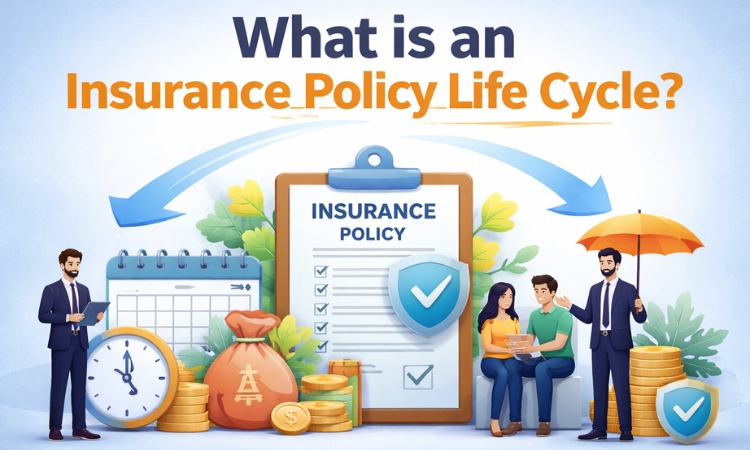
Insurance Policy Life Cycle is the complete start-to-end journey of your insurance policy, covering all the stages like applying, approving, using, and renewing.
When you buy an insurance policy, you not only sign a document but enter into a partnership that will last decades and ensure your quality of life. This is not just another contract; it’s about a full lifecycle of interactions and events that define an insurer’s relationship with their customers.
Why Does the Insurance Policy Life Cycle Matter?
Understanding the Insurance Policy Life Cycle is essential for better decisions, management, and getting maximum benefits from the policy. This also helps you manage risks better and save money in the long run.
For insurers, the Insurance Policy Life Cycle guides a compliant framework to enhance their customer interactions and life-time impact. This helps insurers improve service, reduce manual work, and introduce automation and AI at each stage.
In the modern age of the 21st century, where technology is empowering all industries, insurance companies are also shifting to all-in-one insurance administration systems to manage the policy lifecycle more effectively and efficiently. This approach is transforming heavy processes into seamless, real-time experiences for both customers and insurers.
Also Read:
Insurance Policy Life Cycle Stages
Quote and Application
The first stage of the Insurance Policy Life Cycle starts with the application or the first interaction where a customer requests a quote. There are several media for this:
- Emails
- Online submissions
- Wholesale brokers, etc.
The major task is to collect all the customer information, validate the data, extract key underwriting, and submit the policy information data into the system.
Underwriting and Policy Issuance
After the review process of the application, the insurers decide whether to offer customers coverage or not. If yes, at what prices? They assess the risks and may look for additional information such as inspection reports, health reports, or financial records.
If everything seems fine, the insurers issue the policy document with all the coverage details, limits, exclusions, and premiums. Now, this becomes an active contract between both parties.
Policy Administration
Throughout the life cycle of the policy, the insurers of reputed general insurance companies in Delhi maintain all the administrative tasks, such as the following:
- Billing
- Endorsements (policy changes),
- Renewals, and
- Compliance
The policy driver can also update the customer information and status based on the responses and the relationship with the insurer.
Claims Management
Claim management is probably the most important stage for the Insurance Policy Life Cycle. This stage comes when something bad happens to your customers, such as a car accident, a fire, or a health emergency.
In such cases, the policy holder or the customer files a claim and demands the money promised. At this time, the insurer investigates the incident and ensures the damages or losses.
If everything is as claimed, the insurer next processes the payout as per the company’s guidelines. The motive here is to ensure speed, transparency, and prime customer service to the beneficiary.
Renewal
Most policies have a set term of about 6 or 12 months. It is the insurer’s job to send a renewal offer to the policyholders with updated offers, reassessed risks, and terms. Now, the policyholder can accept the renewal or search for alternatives. However, several insurance companies also offer to modify coverage as well.
Here, the previous data history of customers helps the insurance companies to price the renewals more accurately.
Policy Cancellation or Expiration
Now, the final stage comes when the policy expires, or the customer cancels it completely. This can also happen because of no renewal at the right time. There are several reasons for this, such as:
- No payments on time.
- Moving to a new provider
- Changes in the risk
The life cycle of an insurance policy completes when a policy ends. Also, a new lifecycle begins when the customer starts a new policy somewhere else.
Look at the Different Types of Insurance Policy Life Cycle
- P&C Insurance Policy Life Cycle:
P&C insurance refers to property and casualty insurance policies. Policy lifecycle in such cases deals with home, car, or liability risks. Notably, these policies have a longer lifecycle than the general insurance policy life cycle.
- Life Insurance Policy Life Cycle:
The life insurance policy life cycle is about the life insurance terms. This is a long-term protection against the odds and runs for years or for your whole lifetime. This policy focuses on health and habits and has a fixed premium for the whole life. The final claims pay death benefits to the customer’s family.
- Health Insurance Policy Life Cycle:
Unlike life insurance policies, health insurance covers medical expenses, hospitalisation, and treatments for illnesses or injuries. This policy has a comparatively shorter renewal period, and the premiums change based on age, health status, claims history, and coverage limits. Notably, the policyholders often co-pay in Health Insurance claims.
Conclusion
Understanding the insurance life cycle is essential because it affects your relationships with customers directly. While there will always be some differences between different policies, the main framework stays quite the same.
In this blog, we have discussed how the insurance lifecycle works and affects the claims. Whether it’s P&C insurance or health insurance in Delhi, understanding the whole process helps you become more efficient and create hassle-free results.