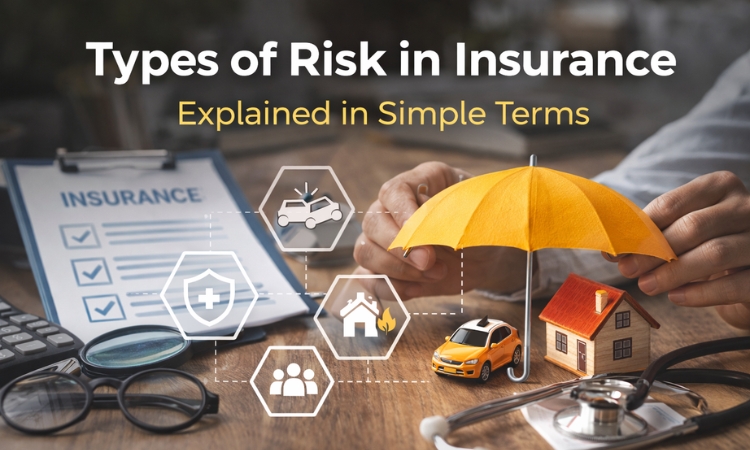
Usually, the world appears to be moving on as usual until some unexpected situation can change everything without warning. Everyone faces numerous dangers in their daily lives, including financial setbacks, health problems, or accidents.
That’s where risk insurance helps you safety and secure your future. It protects you from unexpected events and reduces your financial burden. But how to choose the right type of risk insurance for your needs?
Before knowing about that, you must know about the types of risks so that you can make better financial decisions.
Here, we will discuss different types of risk in insurance in simple terms in detail.
Also Read: What Is Miscellaneous Insurance
What is Risk Insurance?
Risk insurance means the probability that you will experience a financial loss because of possible events that create doubt about your loss. Insurance companies assess risks to determine their coverage decisions and to establish their pricing for insurance premiums. They use risk assessment because it establishes their premium pricing structure. It indicates that higher risk leads to increased costs while lower risk results in reduced expenses.
Types of Risk in Insurance
Insurance providers organize their risks into distinct groups. It enables them to handle their work more effectively.
Here are different types of risk in insurance:
- Pure Risk
Pure risk includes events which can result in either total loss or complete safety without any potential for financial advantage. These risks are unavoidable and commonly covered by insurance policies. It develops unpredictable outcomes which result in dangerous consequences.
Example: Pure risk includes events such as accidents, fires and natural disasters. The occurrence of the results in financial loss while its absence results in no financial benefit. Insurance provides you protection mainly for these types of hazards.
- Speculative Risk
Speculative risk involves situations where you can achieve either financial benefits or financial losses. People usually accept these risks because they want to take part in business operations as well as investment activities. Insurance companies generally do not extend their coverage to these types of risks in insurance.
Example: Speculative risk exists when you invest in stocks or establish a company. The market conditions determine whether you will make money or suffer losses which makes this situation different from pure risk.
- Financial Risk
Financial risk describes a risk type which causes monetary losses that financial professionals can measure. The risks which directly impact an individual through their earnings and savings and possessions become critical factors in insurance planning.
Example: Financial risk shows the loss which results from property damage, medical costs and business interruption. Insurance policies exist to provide you compensation for the specific financial losses which can be measured.
- Particular Risk
Particular risk affects an individual or a small group rather than the entire society. Individual situations determine personal risks which you face during your daily activities.
Example: Theft of a car or a road accident affecting a single person demonstrates a particular risk. Insurance policies like motor insurance or property insurance cover such risks.
- Static Risk
Static risks means risks which maintain their original state because they lack economic impacts. Human actions and natural events create these types of risks.
Example: Static risks include theft and dishonesty and natural disasters. The risks continue to exist during times when the economy operates in a stable and predictable manner.
- Dynamic Risk
Dynamic risks arise from economic developments, technological advancements and social transformations. The risks create complex situations that affect numerous individuals.
Example: Dynamic risks emerge from market trend shifts and technological innovations and economic transformations. Industries which develop through time create such risks for businesses to manage.
- Fundamental Risk
The entire society experiences fundamental risk which affects multiple people across different groups. These risks exist because of natural or social events which you cannot control.
Example: The fundamental risks which exist in the world include earthquakes, floods, pandemics and economic crises. The wide impact of these risks leads governments and major insurance programs to take responsibility for their management.
Also Read: Difference Between Indemnity and Insurance
The Life Cycle of Insurance Policies
The structured framework of an insurance policy life cycle begins with its initial stage and extends until its final stage. Its understanding enables you to comprehend the functioning of insurance throughout its different points.
The proposal stage is where the customer submits details to apply for insurance. The underwriting stage involves risk evaluation by the insurer to decide coverage and premium. The policy becomes effective when the insurance company approves it and issues its official document. You can search for general insurance companies in Delhi for better results.
As a policyholder, you need to make premium payments to maintain active status for your policy. You use the claims process to obtain payment after an event occurs. The policy proceeds to renewal or termination based on the established terms and conditions.
Why Risk Understanding Matters?
If you understand risk, you will make better financial choices for your personal finances. It helps you to select proper insurance coverage. The organization informs you about potential hazards which will allow you to create effective plans for dealing with unpredictable situations.
The information enables you to choose the proper policy which matches your requirements while delivering adequate financial security. Your understanding of risks will help you reduce unnecessary spending while making better decisions which will assist you in reaching your future objectives.
Types of Risk in Life Insurance
Life insurance mainly focuses on risks related to your life and financial stability. The insurer uses these risks to determine policy limits and premium rates and to calculate future payouts.
Here are different types of risk in life insurance:
- Mortality Risk: In this risk, the insured individual faces death risks throughout the duration of their insurance policy.
- Longevity Risk: Here, the insured individual faces increased payout obligations because they will likely live beyond their expected lifespan.
- Investment Risk: In this, investors face the risk of receiving lower returns from their invested premiums than they had anticipated.
- Expense Risk: The risk exists that insurers will experience increased operational and administrative expenses throughout their business activities.
- Lapse Risk: This type of risk exists that policyholders will stop making premium payments before their policies reach maturity.
Conclusion
When you are on the way to making proper financial decisions, you should comprehend the types of risk in insurance which exist. Insurance policies utilize different risk types which range from pure risk to dynamic risk and fundamental risk to establish their pricing and design.
Insurance works as a financial tool which creates a protective shield for your upcoming years. By remaining informed and selecting appropriate insurance coverage you enable yourself and your family to stay safe from unforeseen financial burdens.